Sermon Sunday 9 August

Sermon Sunday 9 August

There was a human being in the first century who was called ‘Divine’, ‘Son of God’, ‘God’, ‘God from God’ and whose titles were ‘Lord’, ‘Redeemer’, ‘Liberator’ and ‘Saviour of the World’. Most people, of any faith, would recognise those descriptions and titles as belonging to Jesus of Nazareth. And they do. But if you had mentioned that collection of titles to anyone in the Roman Empire in the first century, they would have had no doubt whom you were talking about – Caesar. It was the Emperor who was divine and the bringer of peace and salvation to the world. This was not even a religious belief as we might now understand the term – if you lived in the Roman Empire, the divine character of Caesar infused every aspect of life, whether financial, political, social or military. It was the theological foundation of the whole system.[1]

Sermon Pentecost 8A

Sermon Pentecost 8A

I don’t often preach about prayer, because the truth is I’m not very good at it. Oh sure, I can launch into a spontaneous spoken prayer at the slightest provocation – I have a natural flair for improv and one of the occupational hazards is being asked to pray without warning at any number of events. And I’m pretty good at writing prayers as well – next to forward-planning, my most favourite nerdy activity is stringing words together. But the really deep, connected life of prayer? That’s not my gift. I struggle with prayer. Struggle to put aside time for it, struggle with any sense that it ‘works’ and struggle with the idea that God is even remotely interested in anything I have to say.

Sermon for Pentecost 7

Sermon for Pentecost 7

The earliest followers of Jesus believed that the end of the world was nigh. They believed that the death and resurrection of Jesus was the beginning of a process which would see the whole world disintegrated, and a new world inaugurated.

This meant at least two things. Firstly, the current time was a temporary arrangement. The world as they knew it was a liminal space. Secondly, there was a real urgency about their work of spreading good news. They wanted everyone to be part of this new world that was coming, and to start living as though the new world had already arrived. I mean, why wait? There’s going to be a new heaven and a new earth, in which there is justice, peace and equity for all – so let’s do that in our small base communities now, as a kind of entrée for what’s about to come.

Sermon for Pentecost 6

Sermon for Pentecost 6

What does it mean to be spiritual? People sometimes tell me that they’re ‘spiritual but not religious’. Sometimes people tell me someone else is spiritual – ‘oh Doreen, she’s such a spiritual person!’. Or sometimes people describe something as being ‘really spiritual’ and there’s whole lines of books and websites dedicated to spirituality, but what does it actually mean?

Quiet things are often described as spiritual. Meditating, praying, reading, maybe listening to whale sounds or plinky plonky music. Walking a labyrinth – that’s definitely spiritual. But are noisy things, but extension, non-spiritual? Can you have a spiritual experience at a heavy metal concert or on a crowded train or at a rally?

Sermon for Pentecost 5

Sermon for Pentecost 5

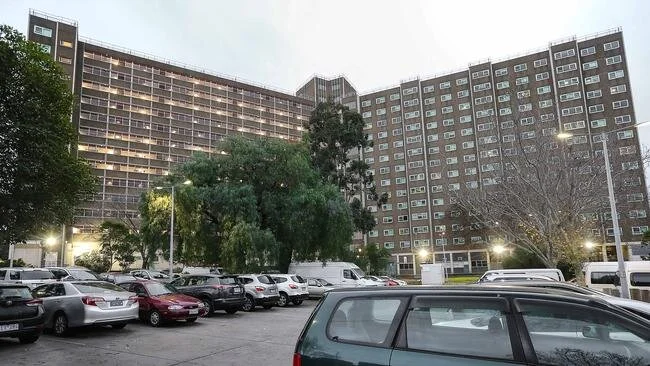
Yesterday it became clear that a crisis is re-emerging in Victoria. The numbers are pointing towards widespread community transmission of COVID19 and restrictions are rapidly being tightened. In North Melbourne and Flemington, nine public housing towers have been totally locked down.

There is no question that action had to be taken. But my heart grieves for the people in those towers. Unlike others in the same suburb, those people are not allowed to leave their apartments for exercise or shopping. Five hundred police officers have been allocated to the towers to keep people in lockdown. There will be a police officer patrolling every floor.

Sermon for Pentecost 4A 2020

Sermon for Pentecost 4A 2020

I despair of the way children are taught about sin. In many situations, it’s a sort of Santa Claus ‘naughty or nice’ approach, where there is a list of things that are good (like patting puppies on the head) and a list of things that are bad (like punching puppies in the face). So children are taught to do more good things and fewer bad things, and this makes God happy.

Sometimes the concept of Original Sin is introduced with little nuance, so some children are taught that they were born sinful, and they often interpret that as meaning they are intrinsically bad. This, of course, is merely part of a litany of grievances I have about how children are introduced to faith, but let’s just focus on sin for today.

Sermon for Pentecost 3 2020

Sermon for Pentecost 3 2020

Some years ago, a woman I worked with came to see me. She was worried about her son and wanted my advice. I said I’d be happy to listen and I would certainly help if I could.

She explained that her son had made a school friend who invited him to a church youth group. On Friday night, a few dozen teenagers would gather in the hall of a local church for games and junk food and bible study. But she was worried. Her son had started to take it all very seriously. He was reading the bible and praying. He was initiating long conversations with her about moral issues.

Worst of all, he had told her that he did not want to drink alcohol until he turned 18.

Sermon for Pentecost 2

Sermon for Pentecost 2

In the opening chapter of Rainbow Spirit Theology, written in 1997, the Rainbow Spirit elders recounted this story.

High on the branch of a Kauri pine in a Queensland rainforest, a small bird rests. Having previously fed on the sweet fruit of the ficus, the bird excretes seeds and leaves them in a small, wet patch of manure on the branch then flies away.

Several weeks later, in the humid conditions, one fertilized seed has sprouted many leaves. Long, hairlike roots have begin to snake downwards, seeking soil and moisture. The seed has come back to the land to grow and develop.

Sermon for Trinity Sunday

Sermon for Trinity Sunday

On Good Friday in 1963, The Reverend Dr Martin Luther King Jr was arrested for his part in a series of mass meetings, sit-ins, marches and boycotts. The police in Birmingham, Alabama took Dr King into custody. That week, eight white clergymen, including Roman Catholic and Anglican (Episcopalian) bishops, had published a statement saying that nonviolent direct action was not the way to achieve justice, and calling for ‘negotiation’. They appealed to the local black community to work for justice in other ways, observing the principles of law and order and common sense.

Sermon for Pentecost

Sermon for Pentecost

There’s a conventional, and quite beautiful hermeneutic of the Pentecost narrative in Acts 2 that goes something like this:

In Genesis 11, there is a primal myth about humanity which explains the presence of many different languages. In this early primordial time before written history (so the story goes) humans settled at a place called Shinar and built a city. They learned to make bricks, and they used those bricks to build a city and a tower. They wanted the tower to reach to the sky. So God (who, of course, lived in the sky) came down to have a look and became worried. If they could build this city and tower, what might they do next? So God confused their language and scattered them around the world, and they stopped building the city. And the ruin was referred to as Babel, from the Hebrew balal meaning to jumble or confuse.

Sermon for Sunday 22 May

Sermon for Sunday 22 May

We say ‘heaven a lot’ but we really don’t talk about heaven at all. ‘Heaven and earth are full of your glory’ we sing in the Eucharistic responses. ‘Our Father in heaven’ we say in the Lord’s prayer, along with ‘your will be done on earth as in heaven’. In some quarters, it is common to address God as ‘Heavenly Father’. But, if someone asked to you to explain what heaven is, or where heaven is, or what the term ‘heaven’ means - what would you say? I can’t let myself off the hook here - one of the motivations for today’s sermon was reading a book by Dr Paula Gooder, a British theologian who has visited Perth a number of times, entitled Heaven.

Sermon for Sunday 17 May

Sermon for Sunday 17 May

Recruiting has to be one of the most miserable enterprises in the contemporary workplace. Very often, people get jobs through personal contacts. That’s how I’ve got nearly every job of my life. But, quite rightly, employers also have to advertise and interview so everyone gets a shot. So people spend hours writing a CV and stressing about an interview, when Darren is always going to get the job because Karen told Aaron that he’d fit right in. Job interviews are the worst, right? Usually the interviewers are anxious and confused, and the interviewee is trying to impress and say all the right things. They are so fake, and you can’t tell anything from them really. That’s why people who can afford it use an agent to get them work. Someone who speaks on their behalf, has informal and casual conversations and helps do a bit of matchmaking. Actually, these matchmaker people are solid gold. You can use them in real estate and buying insurance and planning a wedding and negotiating an EBA and just about anything really. I wonder if there’s a time you’ve suddenly realised that having someone act for you is going to be much more successful than trying to do it yourself?

Sermon for Sunday 3 May

John 10:1-10

Most years, I conduct the memorial service for International Workers Memorial Day. In Perth, the memorial takes place at Solidarity Park, across the road from State Parliament. Some of you will remember the ‘Third Wave’ protests in 1997 when that site was occupied for six months in protest at pending legislation. Today, it holds a memorial to workers who have gone to work and not come home. This year, just a few of us gathered at the memorial and the ceremony was livestreamed. It was just as meaningful, but quite different to the usual experience.

I particularly missed seeing comrades from the CFMEU in attendance. Those guys really know how to make an entrance! They form up out the front of Parliament House with their flags and march together to Solidarity Park en masse. It’s impressive and a bit terrifying, because people who work in construction, forestry, mining and energy are pretty tough from all that physical work. Of course, the workers themselves are all big softies once you get to know them – men and women who care deeply about one another and stand up for safety and against injustice. Because of that passion, and a talent for salty language, they are often in conflict with business owners and corporations, and sometimes get called ‘thugs’. Their biggest enemy? The Master Builders Association. Whenever there’s an industrial issue, you can guarantee that the CFMEU and the MBA will be on opposing sides.

So I was surprised on Friday when I saw that these two organisations, who are traditional enemies, joined together to call for a $10 billion investment in social and affordable housing as part of a stimulus package to recover from COVID19. It makes perfect sense. Construction workers need jobs, construction companies need income, people need affordable places to live, and social housing doesn’t make money, but in the long run it doesn’t cost money either. It’s a win-win strategy for government and industry – so the stakeholders have got together to develop a grassroots, collaborative solution to propose to governments.

It may seem like the most logical thing in the world, but it isn’t always widely understood that having secure accommodation is the prerequisite for nearly every other thing that makes for a fulfilling life. Secure accommodation makes it more possible to access education, makes it easier to get a job, makes it easier to access health care and keep good mental health. It helps families stay together and helps reduce domestic and family violence. As we are seeing during this pandemic, secure accommodation also lowers infection risk and enables people to self-isolate when they are sick (with any kind of illness). Having a steady place to live that costs less than 30% of your income improves lives, whethers it’s social housing provided by a charity, affordable housing supported by government investment, low-interest loans or tax incentives for owner-occupiers. It just works.

Now, I’m bleating on about housing policy and may be wondering why. Here’s why.

When we imagine sheep and shepherds, we tend to imagine vast green pastures on rolling hills with fluffy white sheep gambolling along merrily going baa. But when you visit the Holy Land, you don’t find anything like that. There are still Bedouin people today who herd sheep, and the sheep look tough and have dark wool. They are muscly and sure-footed from climbing over the rocks and hills and desert spots. You don’t have a huge flock, because there’s not enough grass and plants. Lamb is tasty and mutton isn’t, so you only keep enough adult sheep to give birth to more sheep and provide some wool. A shepherd in, say, Bethlehem might have a couple of dozen sheep and after a day out wandering, would bring them home. They might live in a split level home made of mud or timber, or, particularly around Bethlehem, they might use a cave as part of the home, with some annex bits built on. The livestock would be brought into the home to keep them safe, and in winter to keep the family warm. There would be a door or a gate, or perhaps a pile of stones, to secure the entry way so the sheep can’t get out and thieves can’t get in.

Even sheep need a home in order to thrive.

In John chapter 10 which we read today, the Jesus of John’s gospel is warning about thieves and bandits who don’t enter the central area of the house (unhelpfully translated as ‘sheepfold’), but climb in by another way. It also mentions a doorkeeper, who was probably a junior family member who had the warm but smelly task of sleeping near the doorway. The sheep are very much part of the household – they are not just possessions, but family members. They know the shepherd’s voice.

The domestic scene continues with Jesus delivering one of his famous I Am statements, to declare that he is the door (or the gate, but I prefer door). Whoever enters by Jesus will be ‘saved’ or kept safe, and those will be able to go in and out and find pasture. The thief is only interested in death and destruction, but Jesus brings abundant life.

Now, there is rich spiritual and theological fodder in imagining Jesus as a metaphorical door to salvation. Through Christ, we can know fullness of life and closeness to God. I’ll leave you to do the wondering about that.

But today I would like to emphasise that Jesus has identified himself as a household item, a piece of construction, a part of a house – a part of a home. The door is the way into all the good stuff that homes can offer – safety and warmth and togetherness, a sense of security and reassurance. Whether home is a cave in Asia Minor or a prefab 3x2 on a new estate, or a tent in a refugee camp or a tiny city apartment – the door to the home is a threshold which shapes us. People who have homes have dignity and hope.

Jesus is, certainly, the door to coming Kingdom of God, which we believe is the true home for everyone. But Jesus is also the door to justice in the present, where we cherish the inherent value of each person by ensuring that each one of us has a place to call home.

As we are, by and large, confined to our homes for a while longer, may we recommit to a faith which cherishes the home as sacred space, and which believes that all people should have a home, because a safe, secure, hospitable home is a foretaste of the Kingdom of God.

Christ is Risen. Alleluia! Alleluia!